Related Posts Plugin for WordPress, Blogger...

Monday, 20 May 2013

How to Win At Heads or Tails Every Time

Step 1: Cop a feel
Flip the coin into the air. As you catch it, slide your thumb under your fingers and use it to feel the surface of the coin. If it's smooth, you know it's heads; the tails side feels textured and rough.

Tip
If you were forced to call a side beforehand and the coin has landed the other way, nudge it over with your thumb.

Step 2: Practice
Practice flipping and feeling the coin with your thumb until you can do it quickly and stealthily—you don't want your opponent to know you're cheating!

Step 3: Try another trick
Try another trick. Holding the coin near the end of your index and middle fingers, flick your wrist up and lift your index finger, spinning the coin like a Frisbee. If you do this correctly, the coin will never flip over.

Step 4: Exploit your opponent's stupidity
If your opponent is tipsy (or simply not too bright), say quickly, "Heads I win, tails you lose." Chances are he won't catch on.

Tip
For pretty good odds, suggest to your opponent that you spin the coin on its edge instead of tossing it—and take tails. A spinning coin lands on tails about 80% of the time.

Step 5: Buy a trick coin
If you can't master either of these techniques, buy a trick coin with either heads or tails on both sides.

Did You Know?
A coin lands the same way it started about 51% of the time.



How To Stay Awake Without Caffeine

Howcast empowers people with engaging, useful how-to information wherever, whenever they need to know how. Emphasizing high-quality instructional videos, Howcast brings you experts who provide accurate information in easy-to-follow tutorials on everything from makeup, hairstyling, nail art design, and soccer to parkour, skateboarding, dancing, kissing, and much, much more.

Step 1: Eat right
Eat plenty of protein, fruits, and vegetables. Avoid overeating starchy foods like pastas, breads, and rice. They can make you drowsy.

Tip
Snack on almonds and cashews, which contain magnesium, a mineral that converts sugar into energy.

Step 2: Stay moving
Stay moving. Go for a brisk 10-minute walk to give you a boost that could last up to two hours.

Step 3: Get a quick jolt
Splash cold water on your face and pulse points and expose yourself to bright light for a temporary jolt of energy.

Step 4: Have some decaf
Try the placebo effect. One study found that drinking a cup of decaf coffee left most people feeling just as awake as drinking the real thing.

Tip
If you need to be up late, take a preemptive nap to keep from nodding off; it's more effective than caffeine at keeping people up and alert.

Step 5: Use aromatherapy
Use stimulating smells. The scent of peppermint and rosemary essential oils has been shown to increase alertness. So breathe deep and enjoy a natural, caffeine-free boost of energy.

Did You Know?
In 1965 17-year-old Randy Gardner stayed awake for 11 days straight for a science fair.

How to Remember What You Read

useful how-to information wherever, whenever they need to know how. Emphasizing high-quality instructional videos, Howcast brings you experts who provide accurate information in easy-to-follow tutorials on everything from makeup, hairstyling, nail art design, and soccer to parkour, skateboarding, dancing, kissing, and much, much more.

Step 1: Skim info
Skim information slowly at first to remember what you read. Never use this as a primary means of absorbing information, but always as a preparation for gathering key points.

Tip
Machines that train the eyes to scan and select meaning and context rather than picking out the smaller letter arrangements help speed reading and deepen concentration.

Step 2: Read word groups
Read word groups rather than single words by developing the habit of snapping the eyes across or down the page.

Step 3: Categorize and associate
Categorize and associate information you read with other knowledge in your life, to establish familiar cues for retrieving facts.

Step 4: Take notes
Take succinct notes on significant facts and information when reading books or studying for exams. Say the words aloud to hear yourself and help commit it to memory. Repeat the process.

Step 5: Study with purpose
Study with purpose and confidence, interacting with the material. Compare and contrast what is being memorized and paraphrase for simplified understanding. Grill yourself with questions to reinforce the lesson.

Tip
Avoid lazily highlighting everything. Highlight key passages, words, or phrases.

Step 6: Visualize to recall
Visualize faces with names that have to be remembered. Link important dates in your assignment mentally by picturing significant calendar events, birthdays, or holidays near the newly learned dates.

Step 7: Keep single focus
Concentrate with purpose on one thing at a time -- a paragraph, a sentence, or a word. Disallow any distractions, focusing on the meaning, and test to make sure you have it before moving on.

Step 8: Pick the time of day
Pay attention to the times of day when you're most alert and schedule your study time accordingly. Work in short bursts at first to expand attention and grasp.

Did You Know?
More than 300,000 iPads were sold on the first day they hit the market.

Born to Learn

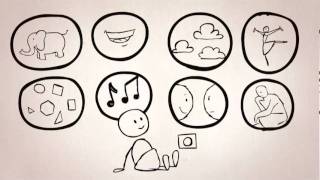
Born to Learn is the first animation in a fascinating series aimed to provide easy-access to the exciting new discoveries constantly being made about how humans learn! Narrated by Damian Lewis
Thumbnail